
Umrah is a key Islamic act of worship that every Muslim longs to do. This act of prayer serves as a means of purifying the soul, seeking forgiveness for sins, and drawing closer to Allah Almighty. During the performance of Umrah, specific supplications are recited at different places and occasions, which makes this act of worship more blessed and popular. In this blog post, we will present the important supplications of Umrah in Arabic and their Urdu translation so that every Muslim can easily remember them and recite them with humility and reverence during Umrah.
Umrah means “visit”, and in Islamic terminology, a specific visit to the Kaaba is called Umrah. The performance of Umrah includes donning Ihram, performing Tawaf and Sa’i, and having one’s hair cut or shaved. Umrah can be performed at any time, while Hajj is performed on specific days.
Specific prayers are recited at each stage during Umrah. Reciting these prayers adds spirituality to the worship and brings one closer to Allah Almighty.
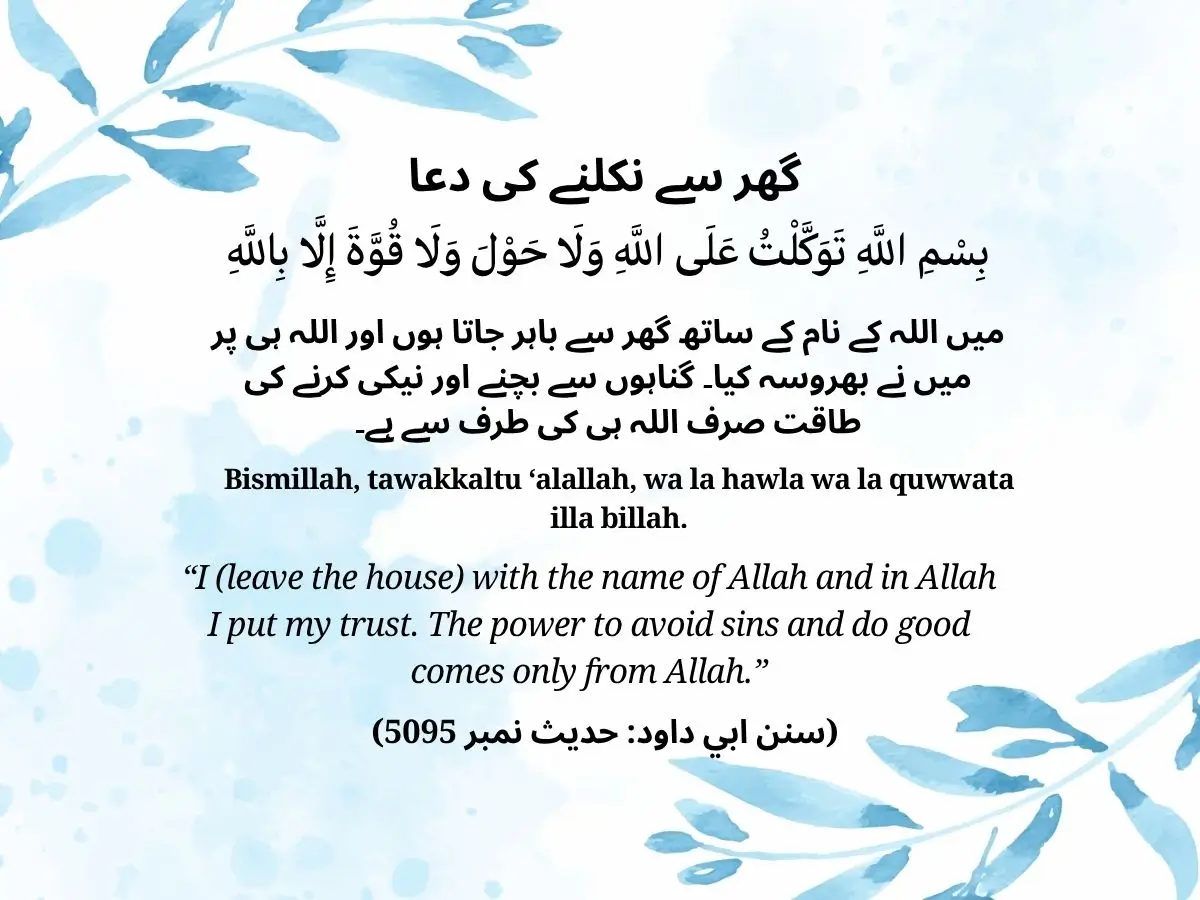
انس بن مالک رضی اللہ عنہ کہتے ہیں کہ نبی اکرم صلی اللہ علیہ وسلم نے فرمایا: جب آدمی اپنے گھر سے نکلے پھر کہے «بسم الله توكلت على الله لا حول ولا قوة إلا بالله»۔ [سنن ابي داود/أبواب النوم /حدیث: 5095]
English Arabic:
Bismillah, tawakkaltu ‘alallah, wa la hawla wa la quwwata illa billah
English Translation:
In the name of Allah, I put my trust in Allah; there is no power or strength except with Allah.
Arabic:
بِسْمِ اللّٰهِ تَوَكَّلْتُ عَلَى اللّٰهِ لَا حَوْلَ وَلَا قُوَّةَ اِلَّا بِاللّٰهِ
Urdu Translation:
اللہ کے نام سے نکل رہا ہوں، میرا پورا پورا توکل اللہ ہی پر ہے، تمام طاقت و قوت اللہ ہی کی طرف سے ہے۔
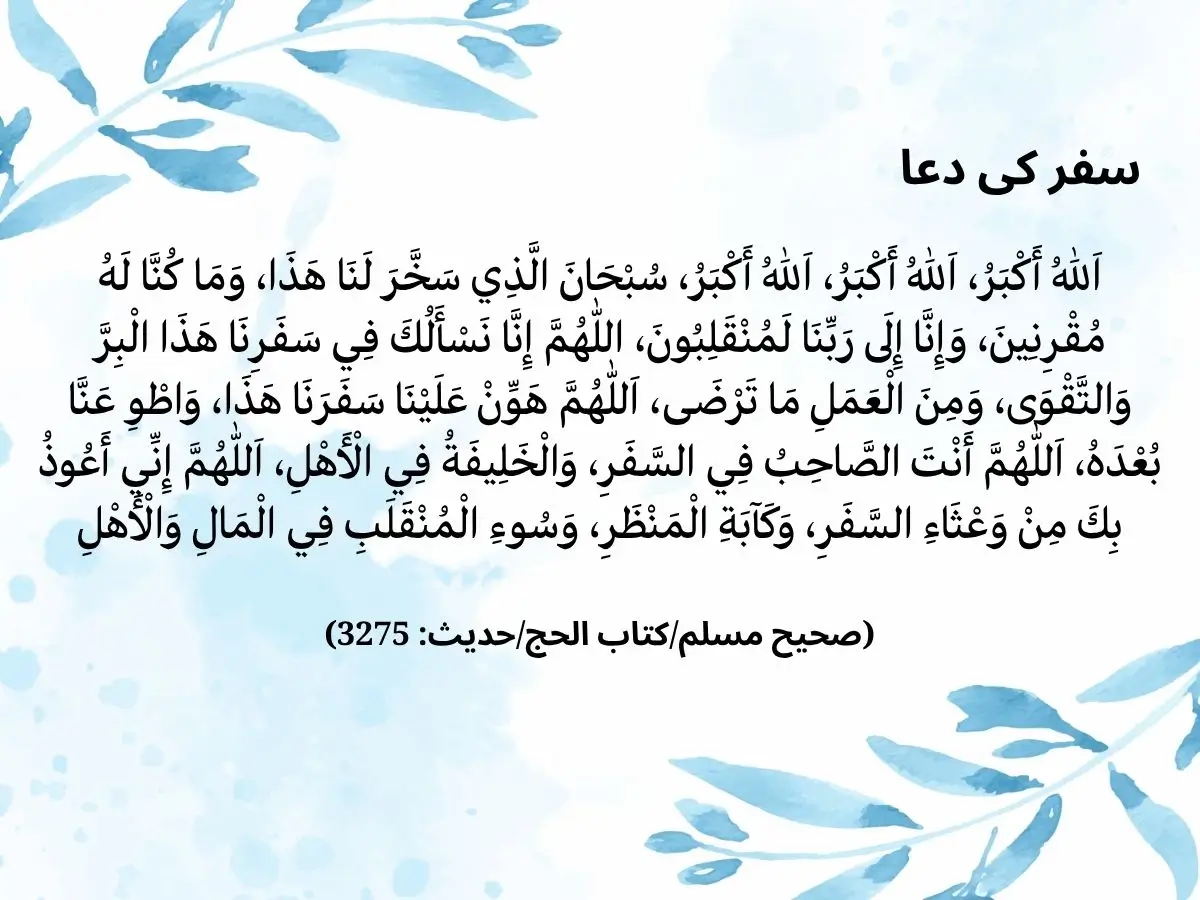
حضرت علی ازدی رضی اللہ عنہ سے روایت ہے کہ حضرت عبداللہ بن عمر رضی اللہ عنہما نے انہیں سکھایا کہ رسول اللہ صلی اللہ علیہ وسلم کہیں سفر میں جانے کے لیے اپنے اونٹ پر سوار ہوتے تو تین بار اللہ اکبر فرماتے، پھر یہ دعا پڑھتے: «سبْحانَ الَّذِي سَخَّرَ لَنَا هَذَا وَمَا كُنَّا لَهُ مُقْرِنِينَ، وَإِنَّا إِلَى رَبِّنَا لَمُنْقَلِبُونَ، اللَّهُمَّ إِنَّا نَسْأَلُكَ فِي سَفَرِنَا هَذَا الْبِرَّ وَالتَّقْوَى، وَمِنَ الْعَمَلِ مَا تَرْضَى، اللَّهُمَّ هَوِّنْ عَلَيْنَا سَفَرَنَا هَذَا وَاطْوِ عَنَّا بُعْدَهُ، اللَّهُمَّ أَنْتَ الصَّاحِبُ فِي السَّفَرِ، وَالْخَلِيفَةُ فِي الْأَهْلِ، اللَّهُمَّ إِنِّي أَعُوذُ بِكَ مِنْ وَعْثَاءِ السَّفَرِ، وَكَآبَةِ الْمَنْظَرِ، وَسُوءِ الْمُنْقَلَبِ فِي الْمَالِ وَالْأَهْلِ.» [صحيح مسلم/كتاب الحج/حدیث: 3275]
English Arabic:
Subhan-allazi sakh-hara lana haza wa ma kunna lahu muqrineen, wa inna ila Rabbina la-munqaliboon. Allahumma inna nas’aluka fee safarina haza al-birra wat-taqwa, wa minal-amali ma tardha. Allahumma hawwin ‘alaina safarana haza wat-wi ‘anna bu’dah. Allahumma antas-Sahibu fis-safari, wal-khaleefatu fil-ahl. Allahumma innee a’oozu bika min wa’thaa’is-safari, wa ka’aabatil-manzhari, wa soo’il-munqalabi fil-maali wal-ahl.
English Translation:
Glory be to Him Who has subjected this to us, and we could not have subdued it. And indeed, to our Lord we will return. O Allah, we ask You in this journey of ours for righteousness and piety, and for deeds that please You. O Allah, make this journey easy for us and shorten its distance for us. O Allah, You are the Companion on the journey and the Guardian of the family. O Allah, I seek refuge in You from the hardship of travel. And the gloomy appearance, and the bad outcome in wealth and family.
Arabic:
اَللَٰهُ أَكْبَرُ، اَللَٰهُ أَكْبَرُ، اَللَٰهُ أَكْبَرُ، سُبْحَانَ الَّذِي سَخَّرَ لَنَا هَذَا، وَمَا كُنَّا لَهُ مُقْرِنِينَ، وَإِنَّا إِلَى رَبِّنَا لَمُنْقَلِبُونَ، اللّٰهُمَّ إِنَّا نَسْأَلُكَ فِي سَفَرِنَا هَذَا الْبِرَّ وَالتَّقْوَى، وَمِنَ الْعَمَلِ مَا تَرْضَى، اَللّٰهُمَّ هَوِّنْ عَلَيْنَا سَفَرَنَا هَذَا، وَاطْوِ عَنَّا بُعْدَهُ، اَللّٰهُمَّ أَنْتَ الصَّاحِبُ فِي السَّفَرِ، وَالْخَلِيفَةُ فِي الْأَهْلِ، اَللّٰهُمَّ إِنِّي أَعُوذُ بِكَ مِنْ وَعْثَاءِ السَّفَرِ، وَكَآبَةِ الْمَنْظَرِ، وَسُوءِ الْمُنْقَلَبِ فِي الْمَالِ وَالْأَهْلِ
Urdu Translation:
پاک ہے وہ جس نے اس کو ہمارے تابع کر دیا اور ہم اسے مسخر نہ کر سکے۔ اور بے شک ہم اپنے رب کی طرف لوٹنے والے ہیں۔ اے اللہ ہم اپنے اس سفر میں تجھ سے نیکی اور پرہیزگاری اور ایسے اعمال مانگتے ہیں جن سے تو راضی ہو۔ اے اللہ ہمارے لیے اس سفر کو آسان فرما اور اس کی مسافت کو ہمارے لیے کم فرما۔ اے اللہ تو سفر میں ساتھی اور خاندان کا نگہبان ہے۔ اے اللہ میں سفر کی مشقت سے تیری پناہ مانگتا ہوں۔ اور اداس ظہور، اور مال اور خاندان میں برا نتیجہ.
English Arabic:
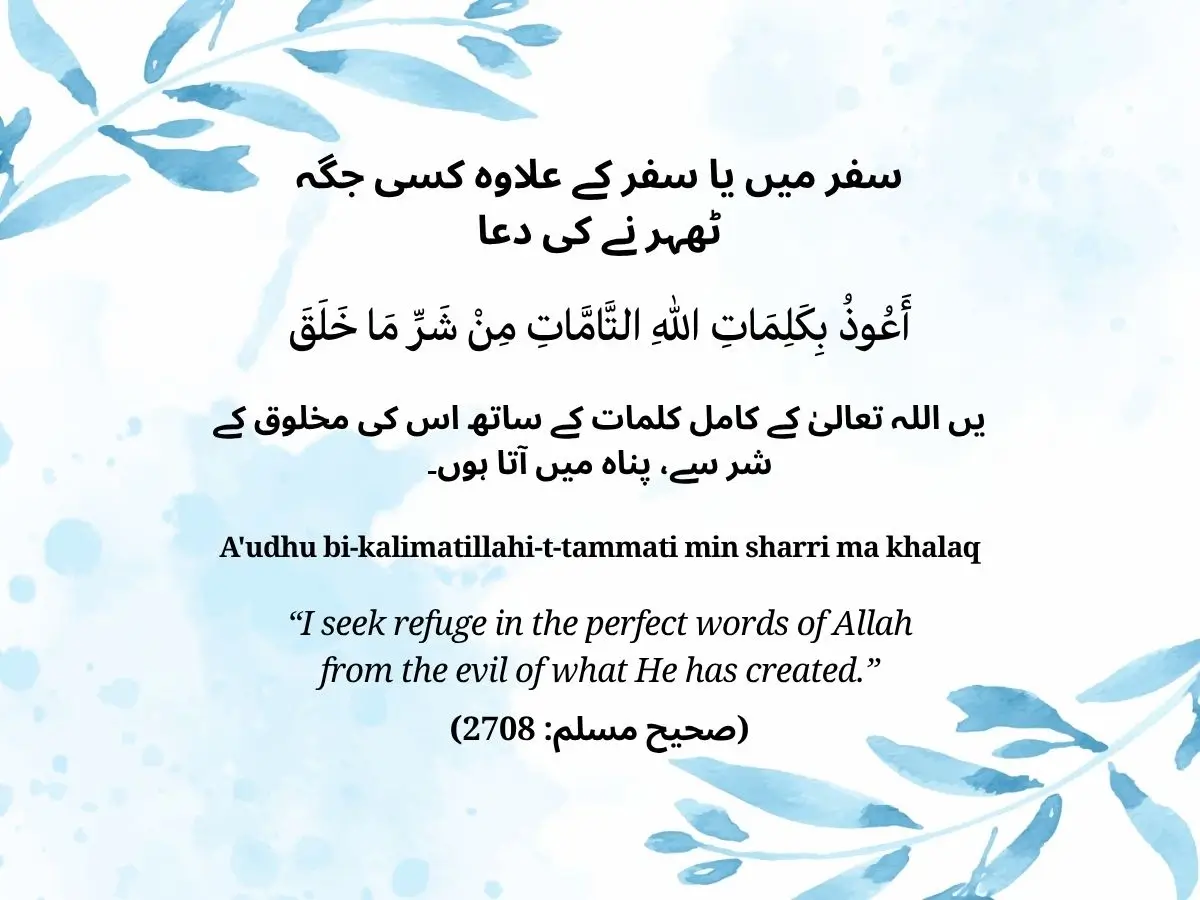
A’udhu bi-kalimatillahi-t-tammati min sharri ma khalaq
English Translation:
I seek refuge in the perfect words of Allah from the evil of what He has created.
Arabic:
أَعُوْذُ بِكَلِمَاتِ اللّٰهِ التَّامَّاتِ مِنْ شَرِّ مَا خَلَقَ
Urdu Translation:
میں اللہ کے کامل کلمات کے ساتھ پناہ مانگتا ہوں ہر اس چیز کے شر سے جو اس نے پیدا کی ہے۔
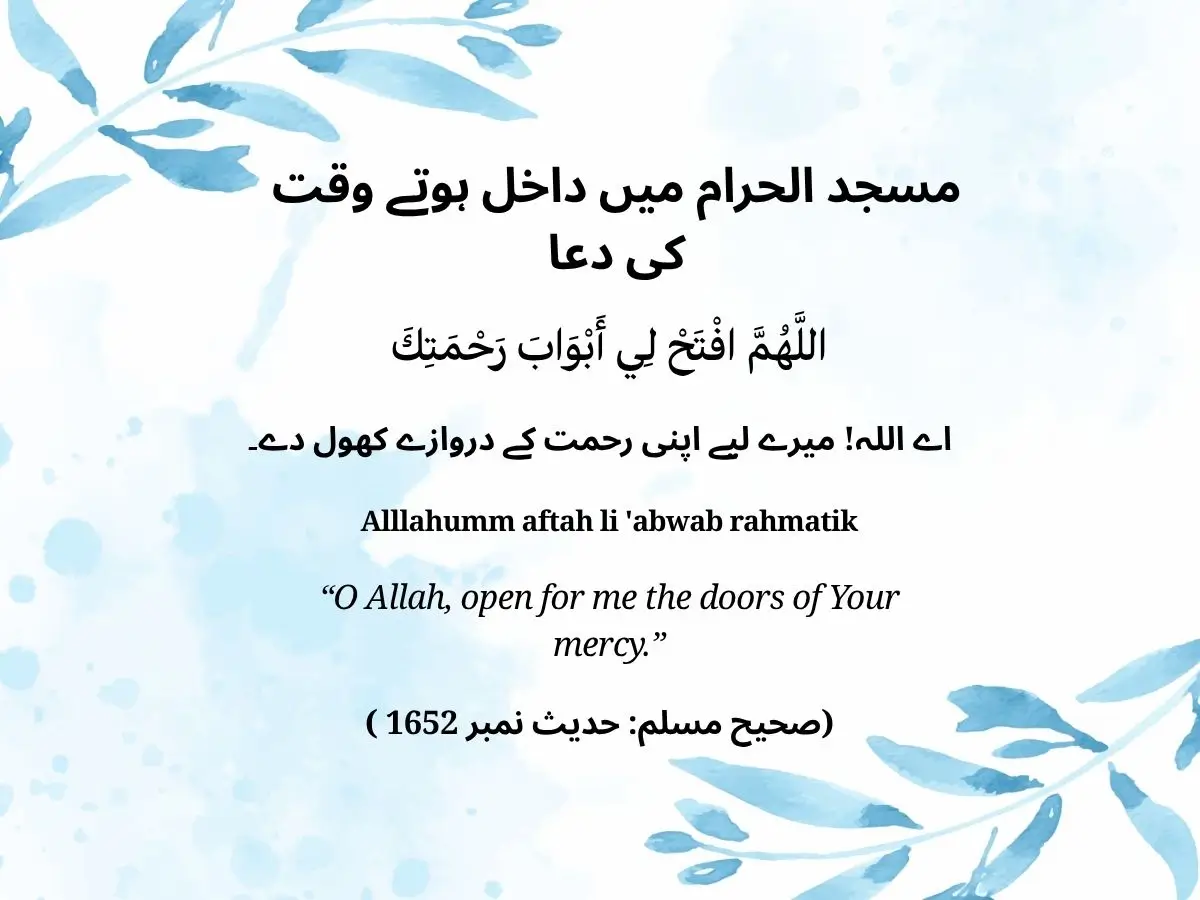
حضرت ابوحمید رضی اللہ عنہ یا حضرت ابواسید رضی اللہ عنہ سے روایت کی، انہوں نے کہا: رسول اللہ صلی اللہ علیہ وسلم نے فرمایا: ”جب تم میں سے کوئی شخص مسجد میں داخل ہو تو کہے: «اللَّهُمَّ افْتَحْ لِي أَبْوَابَ رَحْمَتِكَ» اے اللہ! میرے لیے اپنی رحمت کے دروازے کھول دے۔ [صحيح مسلم/كتاب صلاة المسافرين وقصرها/حدیث: 1652]
English Arabic:
Alllahumm aftah li ‘abwab rahmatik
English Translation:
O Allah, open for me the doors of Your mercy.
Arabic:
اللَّهُمَّ افْتَحْ لِي أَبْوَابَ رَحْمَتِ
Urdu Translation:
اے اللہ! میرے لیے اپنی رحمت کے دروازے کھول دے
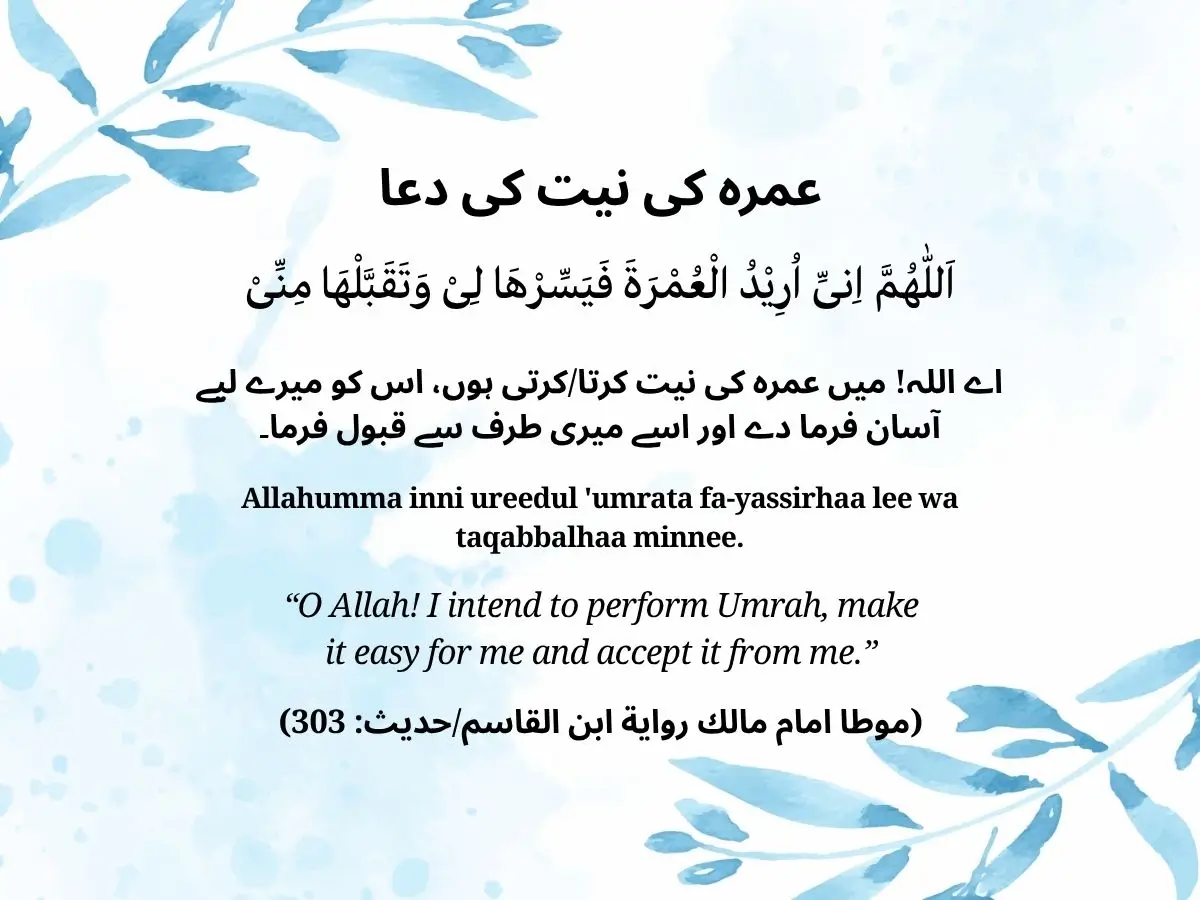
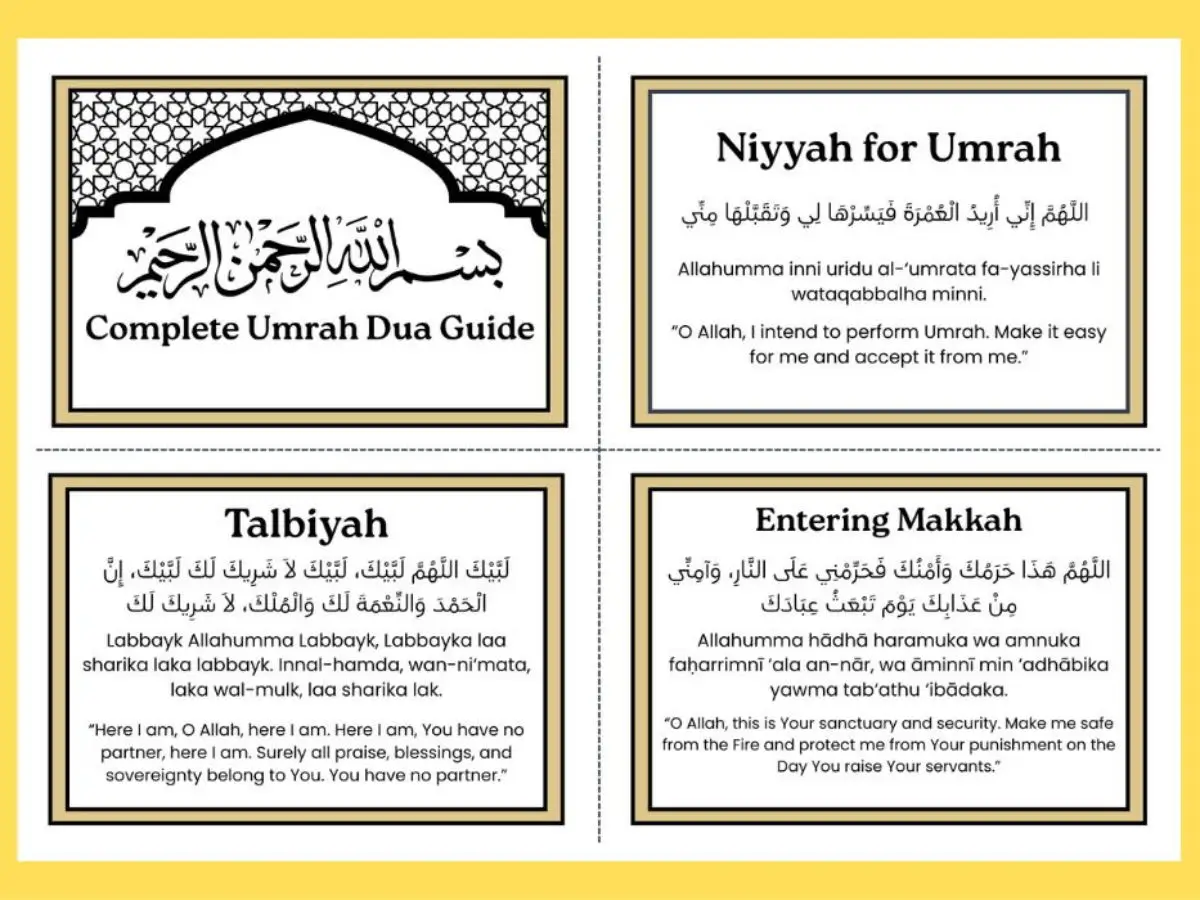
احرام باندھتے ہوئے اللهُمَّ لَبَّيْكَ عُمْرَةً کہیں اور یہی عمرہ کی نیت کے الفاظ ہے۔
English Arabic:
Allahumma inni ureedul ‘umrata fa-yassirhaa lee wa taqabbalhaa minnee.
English translation:
O Allah! I intend to perform Umrah, make it easy for me and accept it from me.
Arabic:
اَللّٰھُمَّ اِنیِّ اُرِیْدُ الْعُمْرَۃَ فَیَسِّرْھَا لِیْ وَتَقَبَّلْھَا مِنِّیْ
Urdu Translation:
اے اللہ! میں عمرہ کی نیت کرتا/کرتی ہوں، اس کو میرے لیے آسان فرما دے اور اسے میری طرف سے قبول فرما۔
Explanation:
This intention is made both in the heart and with the tongue when putting on Ihram. After this, the Talbiyah is recited.
احرام باندھتے وقت جب جانور پر سوار ہونے لگے تو لبیک سے پہلے الحمداللہ، سبحان اللہ اللہ اکبر کہنا۔ [صحيح البخاري/كتاب الحج/حدیث: 1551]
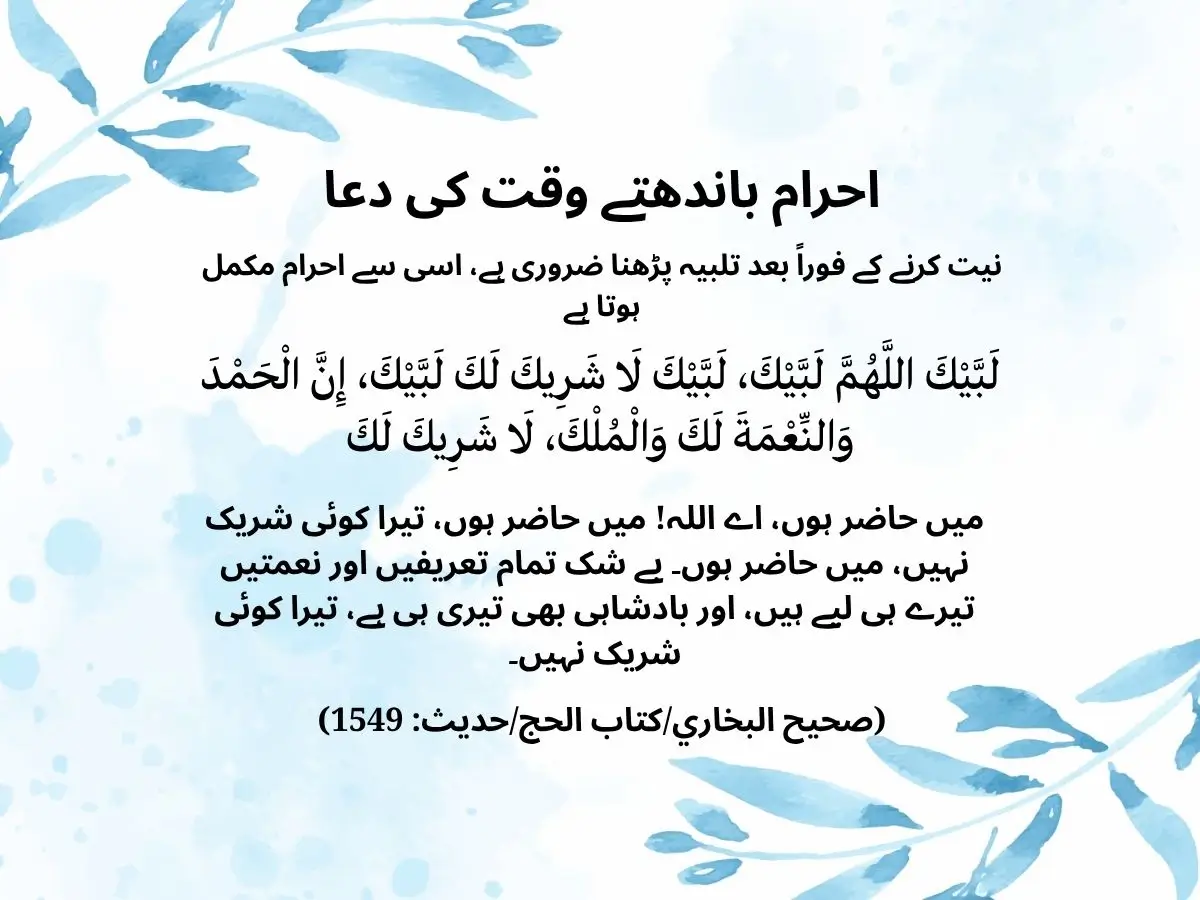
عبداللہ بن عمر رضی اللہ عنہما نے کہ رسول اللہ صلی اللہ علیہ وسلم کا تلبیہ یہ تھا «لبيك اللهم لبيك، لبيك لا شريك لك لبيك، إن الحمد والنعمة لك والملك، لا شريك لك» ”حاضر ہوں اے اللہ! حاضر ہوں میں، تیرا کوئی شریک نہیں۔ حاضر ہوں، تمام حمد تیرے ہی لیے ہے اور تمام نعمتیں تیری ہی طرف سے ہیں، بادشاہت تیری ہی ہے تیرا کوئی شریک نہیں۔
English Arabic:
Labbayka Allahumma labbayka, labbayka la sharikka laka labbayka, inna al-hamd wa ni’ma laka wa al-mulka, la sharikka laka
English Translation:
I am here, O Allah! I am here. You have no partner. I am here. Indeed, all praise and blessings are for You, and the kingdom is Yours; You have no partner.
Arabic:
لَبَّيْكَ اللَّهُمَّ لَبَّيْكَ، لَبَّيْكَ لَا شَرِيكَ لَكَ لَبَّيْكَ، إِنَّ الْحَمْدَ وَالنِّعْمَةَ لَكَ وَالْمُلْكَ، لَا شَرِيكَ لَكَ
Urdu Translation:
میں حاضر ہوں، اے اللہ! میں حاضر ہوں، تیرا کوئی شریک نہیں، میں حاضر ہوں۔ بے شک تمام تعریفیں اور نعمتیں تیرے ہی لیے ہیں، اور بادشاہی بھی تیری ہی ہے، تیرا کوئی شریک نہیں۔
Explanation:
The Talbiyah is recited repeatedly from the time of entering Ihram until the end of Umrah, especially whenever a new stage begins.
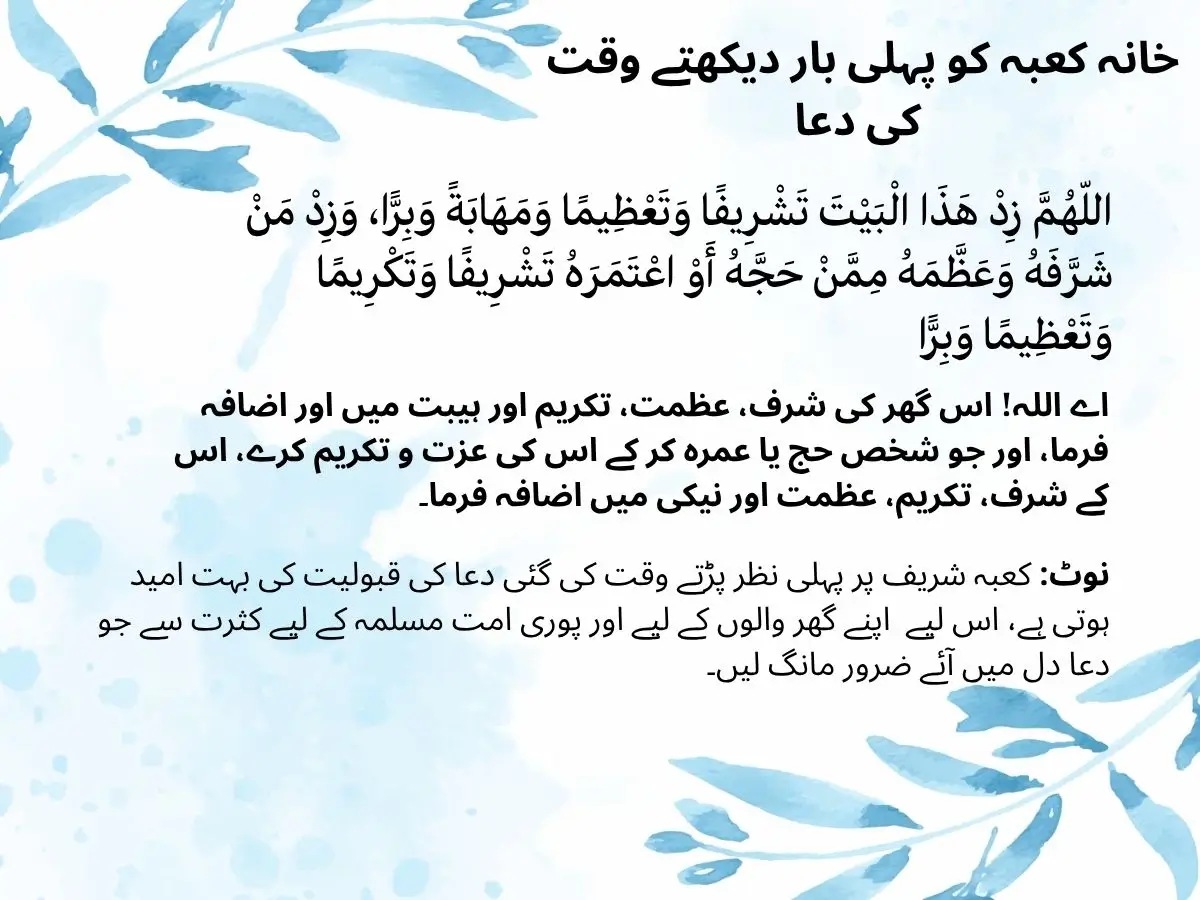
Recommended Dua (Non-specific)
English Arabic:
Allahumma zayd hudha al-bayt tashrifa wa ta’azima wa mahabata wa birah, wa wahda man sharafah wa azamah mimman hajj or a’ta’mrah tashrifa wa ta’azima wa mahabata wa birah
English Translation:
O Allah! Grant this House more honour, greatness, awe, and goodness, and grant honour, greatness, awe, and goodness to whoever honours and glorifies this House, whether he performs Hajj or Umrah.
Arabic:
اللّهُمَّ زِدْ هَذَا الْبَيْتَ تَشْرِيفًا وَتَعْظِيمًا وَمَهَابَةً وَبِرًّا، وَزِدْ مَنْ شَرَّفَهُ وَعَظَّمَهُ مِمَّنْ حَجَّهُ أَوْ اعْتَمَرَهُ تَشْرِيفًا وَتَكْرِيمًا وَتَعْظِيمًا وَبِرًّا
Urdu Translation:
اے اللہ! اس گھر کی عزت، عظمت، ہیبت اور برکت میں اضافہ فرما اور جو اس کی زیارت کریں ان کی عزت اور درجات کو بھی بلند فرما۔
Explanation:
When you first see the Kaaba, recite this supplication and ask Allah for your heart’s desires, as it is likely to be accepted.
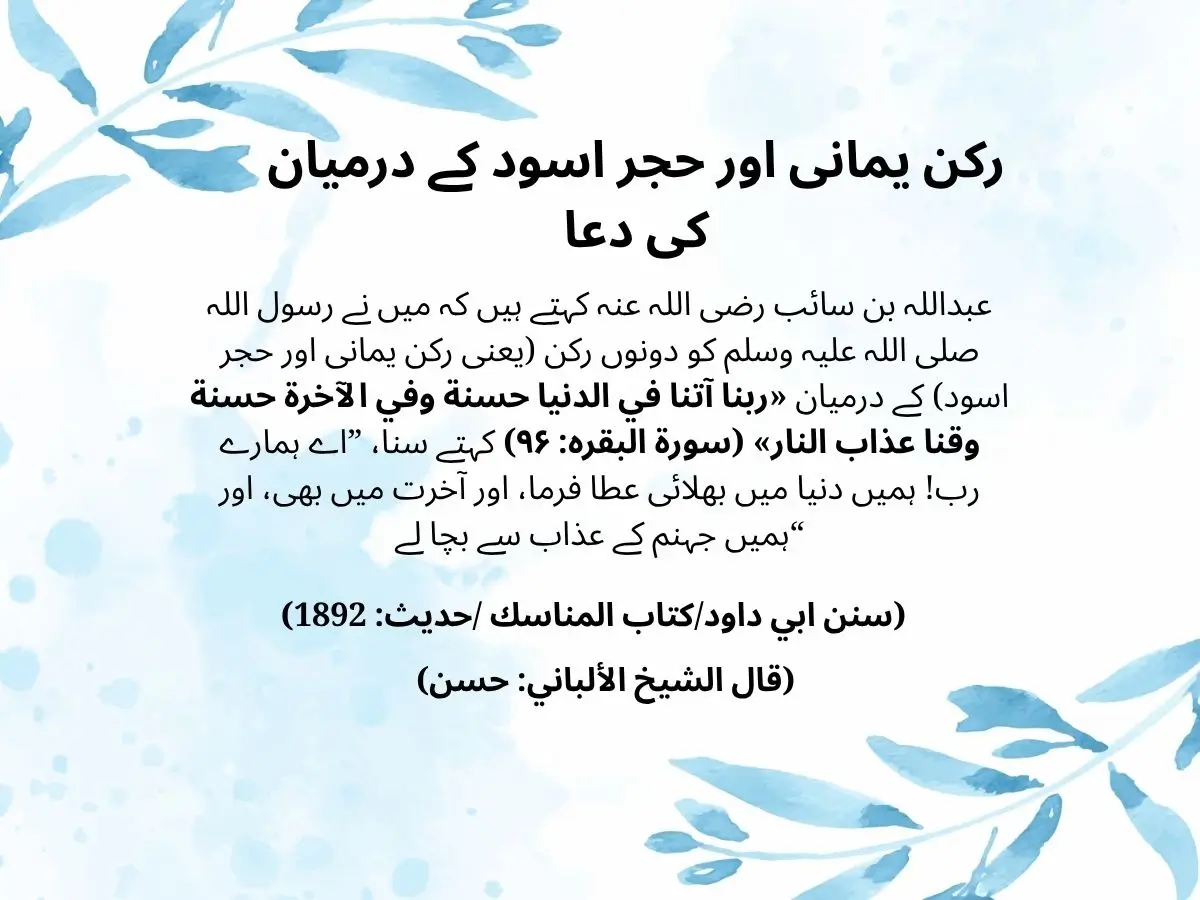
حجر اسود کے برابر سے طواف کا آغاز کریں، ممکن ہو تو بوسہ دیں یا ہاتھ لگا کر چو میں یا حجر اسود کی طرف منہ کر کے اللہ اکبر کہہ دیں۔ یہ عمل ہر چکر میں دہرانا مسنون ہے۔ پہلے تین چکروں میں ذرا تیز چلیں، بعد کے چکر عام رفتار کے ساتھ مکمل کریں۔ ساتوں چکروں میں کوئی بھی دعا مانگی جا سکتی ہے۔ رسول اللہ صلی شمال کی ایم سے طواف کے چکروں کے درمیان پڑھنے کے لیے کوئی خاص دعا ثابت نہیں ہے۔ البتہ عبداللہ بن سائب رضی اللہ عنہ کہتے ہیں کہ میں نے رسول اللہ صلی اللہ علیہ وسلم کو دونوں رکن (یعنی رکن یمانی اور حجر اسود) کے درمیان «ربنا آتنا في الدنيا حسنة وفي الآخرة حسنة وقنا عذاب النار» (سورۃ البقرہ: ۹۶) کہتے سنا، ”اے ہمارے رب! ہمیں دنیا میں بھلائی عطا فرما، اور آخرت میں بھی، اور ہمیں جہنم کے عذاب سے بچا لے“۔ [سنن ابي داود/كتاب المناسك /حدیث: 1892]
English Arabic:
Rabbana Atina Fi Al-Dunya Hasana Wa Al-Akhira Hasana Wa Qina Adhaaba Al-Nar
English Translation:
Oh, our Lord! Grant us good in this world and good in the Hereafter, and save us from the torment of Hell.
Arabic:
رَبَّنَا آتِنَا فِي الدُّنْيَا حَسَنَةً وَفِي الْآخِرَةِ حَسَنَةً وَقِنَا عَذَابَ النَّارِ
Urdu Translation:
اے ہمارے رب! ہمیں دنیا میں بھلائی عطا فرما اور آخرت میں بھی بھلائی عطا فرما، اور ہمیں دوزخ کے عذاب سے بچا۔
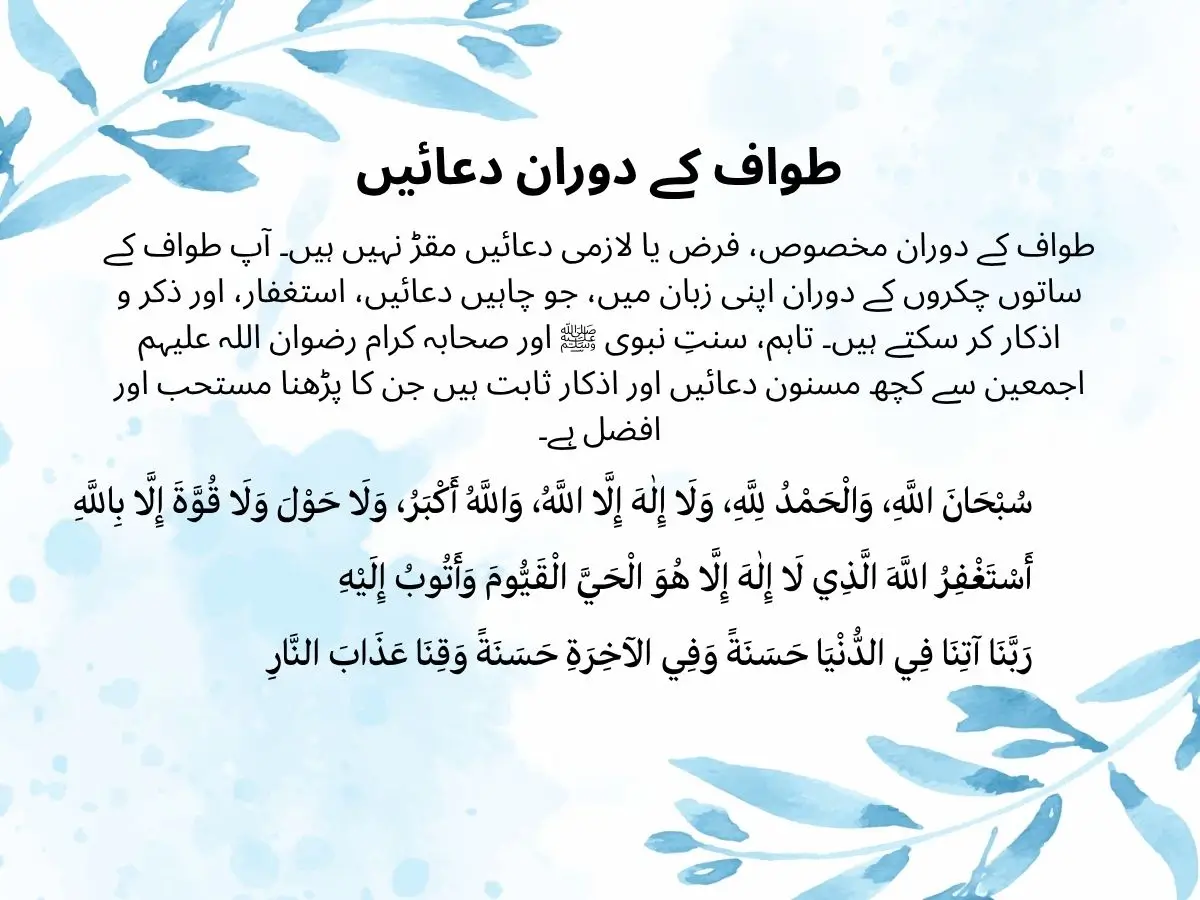
There are no fixed duas for each round of Tawaf in authentic Islamic teachings.
Pilgrims may recite:
Recommended recitations include:
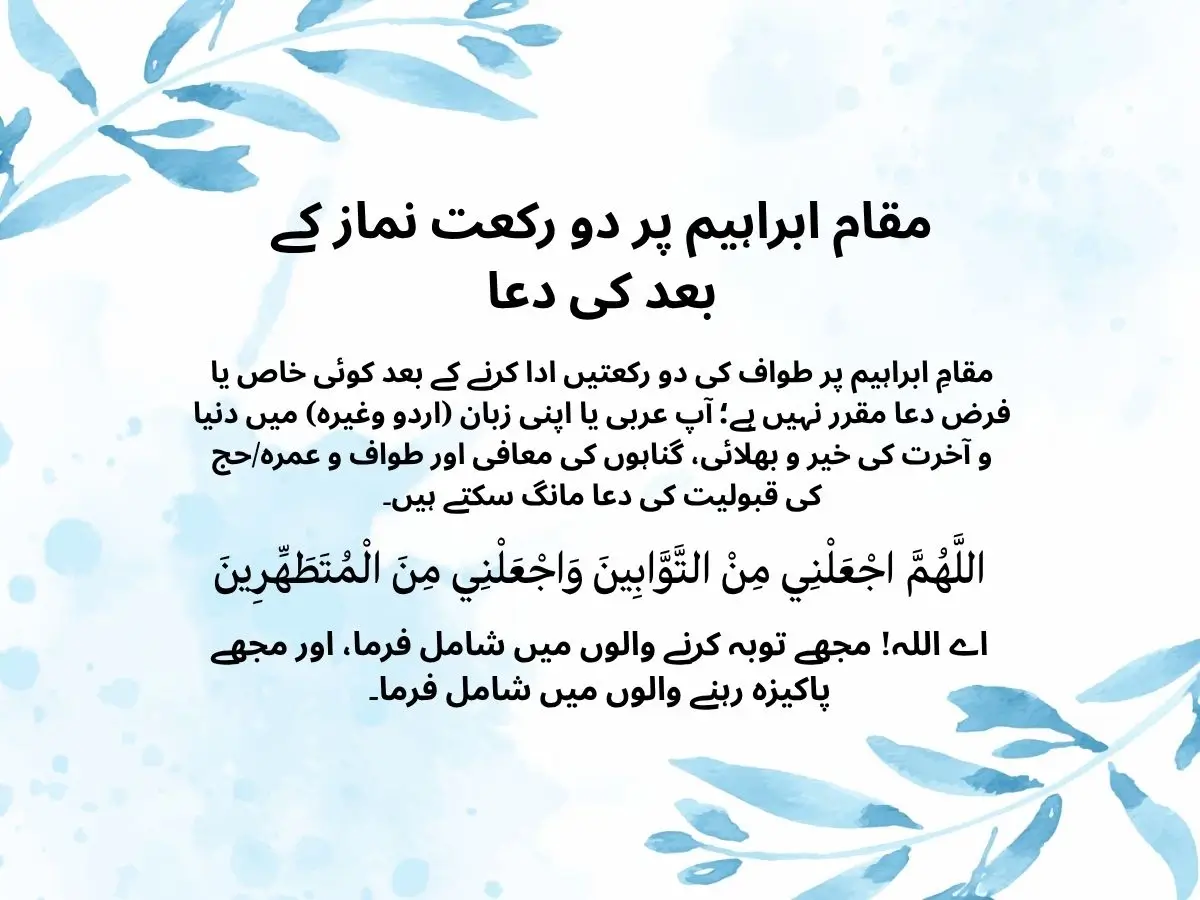
After Tawaf, offer two Rak’ahs behind Maqam Ibrahim if possible.
Then sincerely make personal duas asking for:
English Arabic:
Allahumma aj’aalni min al-tawwaabiin wa’aalni min al-muttaahirin.
English Translation:
O Allah! Make me among those who repent, and make me among those who purify themselves.
Arabic:
اللَّهُمَّ اجْعَلْنِي مِنْ التَّوَّابِينَ وَاجْعَلْنِي مِنَ الْمُتَطَهِّرِينَ
Urdu Translation:
اے اللہ! مجھے توبہ کرنے والوں میں شامل فرما، اور مجھے پاکیزہ رہنے والوں میں شامل فرما۔
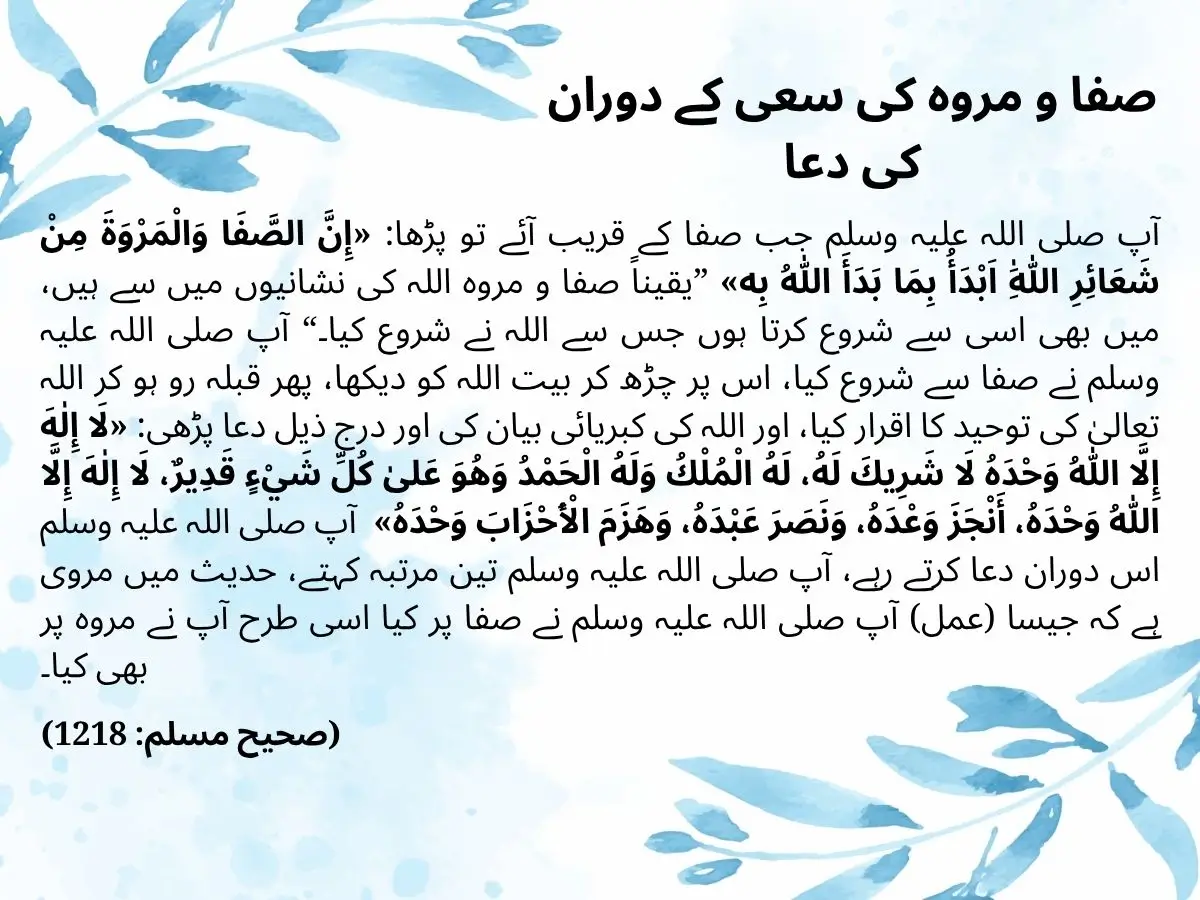
آپ صلی اللہ علیہ وسلم جب صفا کے قریب آئے تو پڑھا: «إِنَّ الصَّفَا وَالْمَرْوَةَ مِنْ شَعَائِرِ اللَٰهِ اَبْدَأُ بِمَا بَدَأَ اللهُ بِه» ”یقیناً صفا و مروہ اللہ کی نشانیوں میں سے ہیں، میں بھی اسی سے شروع کرتا ہوں جس سے اللہ نے شروع کیا۔“ آپ صلی اللہ علیہ وسلم نے صفا سے شروع کیا، اس پر چڑھ کر بیت اللہ کو دیکھا، پھر قبلہ رو ہو کر اللہ تعالیٰ کی توحید کا اقرار کیا، اور اللہ کی کبریائی بیان کی اور درج ذیل دعا پڑھی: «لَا إِلٰهَ إِلَّا اللهُ وَحْدَهُ لَا شَرِيكَ لَهُ، لَهُ الْمُلْكُ وَلَهُ الْحَمْدُ وَهُوَ عَلىٰ كُلِّ شَيْءٍ قَدِيرٌ، لَا إِلٰهَ إِلَّا اللهُ وَحْدَهُ، أَنْجَزَ وَعْدَهُ، وَنَصَرَ عَبْدَهُ، وَهَزَمَ الْأَحْزَابَ وَحْدَهُ» آپ صلی اللہ علیہ وسلم اس دوران دعا کرتے رہے، آپ صلی اللہ علیہ وسلم تین مرتبہ کہتے، حدیث میں مروی ہے کہ جیسا (عمل) آپ صلی اللہ علیہ وسلم نے صفا پر کیا اسی طرح آپ نے مروہ پر بھی کیا۔ (صحيح مسلم: 1218)
Arabic
إِنَّ الصَّفَا وَالْمَرْوَةَ مِن شَعَائِرِ اللَّهِ
Then say:
اللَّهُ أَكْبَرُ، اللَّهُ أَكْبَرُ، اللَّهُ أَكْبَرُ
Continue with:
لَا إِلٰهَ إِلَّا اللهُ وَحْدَهُ لَا شَرِيكَ لَهُ، لَهُ الْمُلْكُ وَلَهُ الْحَمْدُ وَهُوَ عَلىٰ كُلِّ شَيْءٍ قَدِيرٌ، لَا إِلٰهَ إِلَّا اللهُ وَحْدَهُ، أَنْجَزَ وَعْدَهُ، وَنَصَرَ عَبْدَهُ، وَهَزَمَ الْأَحْزَابَ وَحْدَهُ
Explanation:
It is Sunnah to recite this verse at the beginning of Sa’i. Then, during Sa’i, ask Allah for your needs and supplications.
There are no fixed duas required between Safa and Marwah. Pilgrims can dua anything they want.
English Arabic:
Rabbi aghfir war ham innaka anta ul-A’za’ al-Akram
English Translation:
Oh, my Lord! Forgive and have mercy; indeed, you are the most honourable and most generous.
Arabic:
رَبِّ اغْفِرْ وَارْحَمْ إِنَّكَ أَنْتَ الْأَعَزُّ الْأَكْرَمُ
Urdu Translation:
اے میرے رب! معاف فرما اور رحم فرما، بے شک تو سب سے زیادہ عزت والا اور کرم کرنے والا ہے۔
English Arabic:
Allahumma aghfir li wa liman halaq ra’sah
English Translation:
O Allah! Forgive me and whoever has shaved his head.
Arabic:
اللَّهُمَّ اغْفِرْ لِي وَلِمَنْ حَلَقَ رَأْسَهُ
Urdu Translation:
اے اللہ! مجھے اور جس نے اپنے سر کے بال منڈوائے، اسے بخش دے۔
After completing all the rites of Umrah, including Sa’i and shaving/cutting hair, it’s a good time to make a comprehensive dua.
English Arabic:
Allahumma taqabbal minna inna, verily You are the Hearing, the Knowing
English Translation:
O Allah! Accept our worship; indeed, You are the Hearing, the Knowing.
Arabic:
اللَّهُمَّ تَقَبَّلْ مِنَّا إِنَّكَ أَنْتَ السَّمِيعُ الْعَلِيمُ
Urdu Translation:
اے اللہ! ہماری عبادت قبول فرما، بے شک تو سننے والا اور جاننے والا ہے۔
Some of the most beneficial supplications include asking Allah for:
Umrah Ki Dua (عمرہ کی دعائیں) enriches every stage of the pilgrimage with remembrance of Allah, gratitude, humility, and hope for His mercy. By learning these authentic supplications in Arabic with Urdu translation, pilgrims can perform Umrah with greater understanding and devotion. If you like this information, be sure to share it with others, and don’t forget to include these supplications in your Umrah journey. May Allah support and help us all!
WhatsApp Us